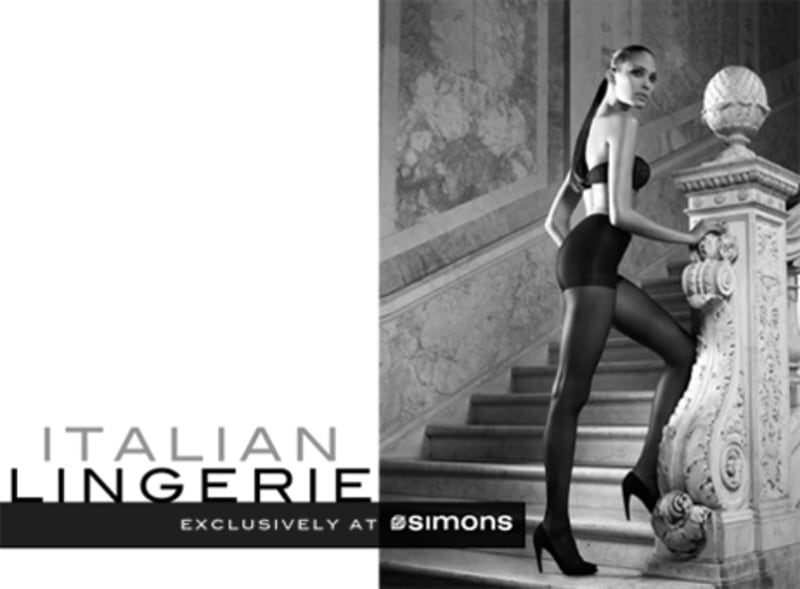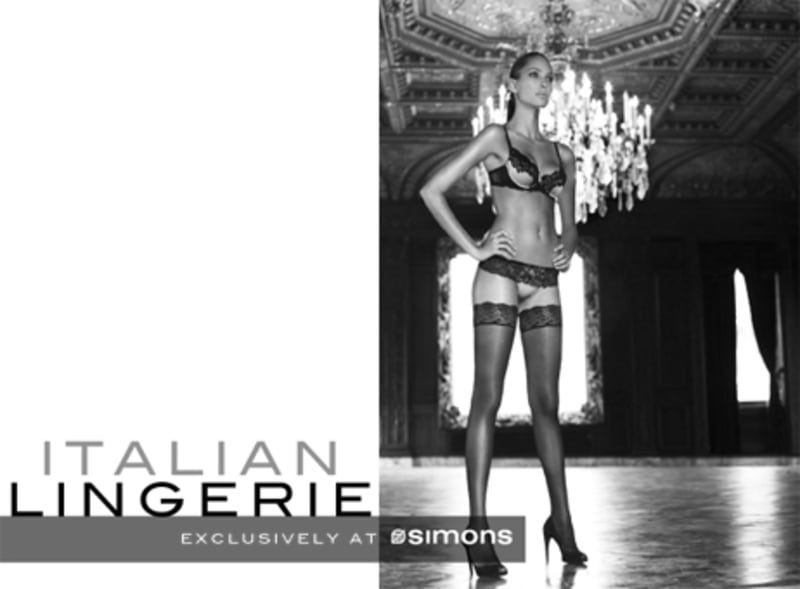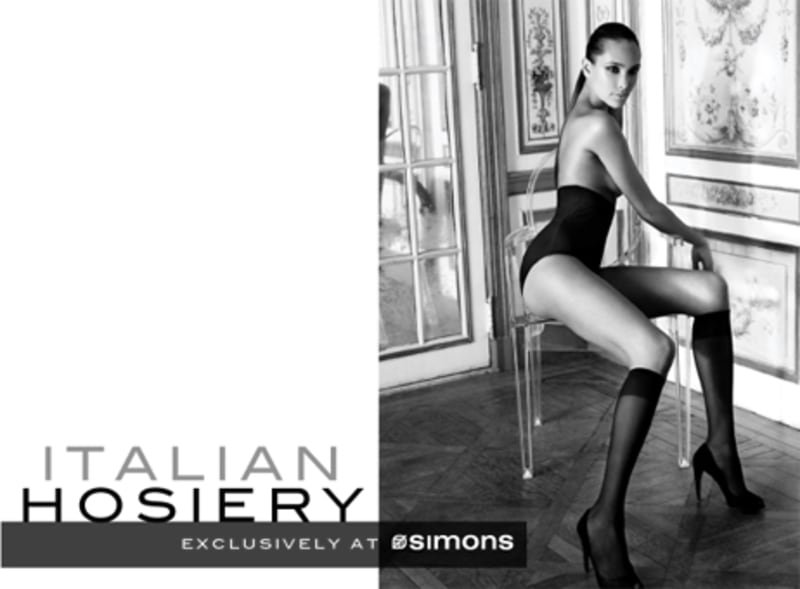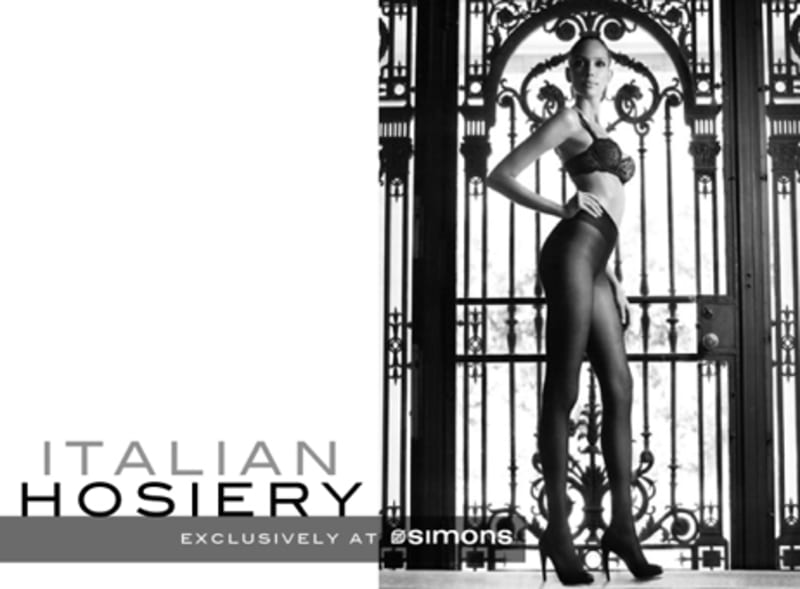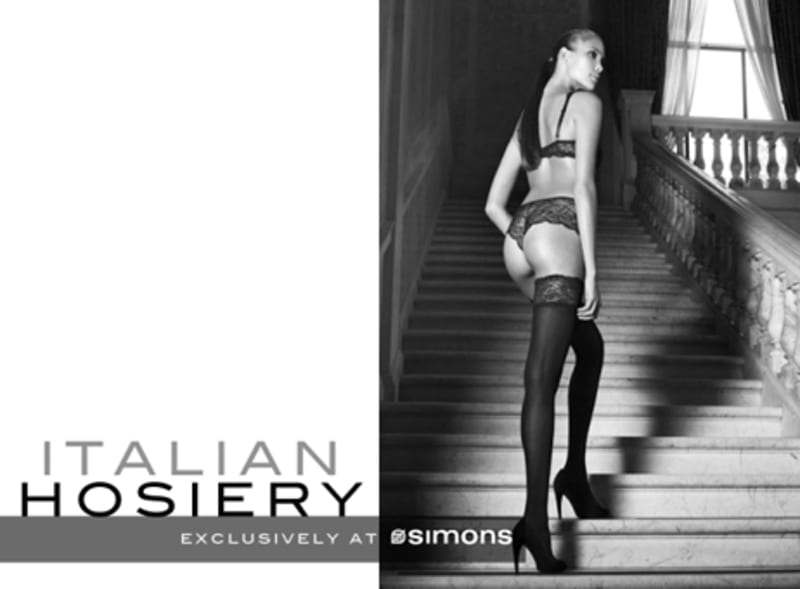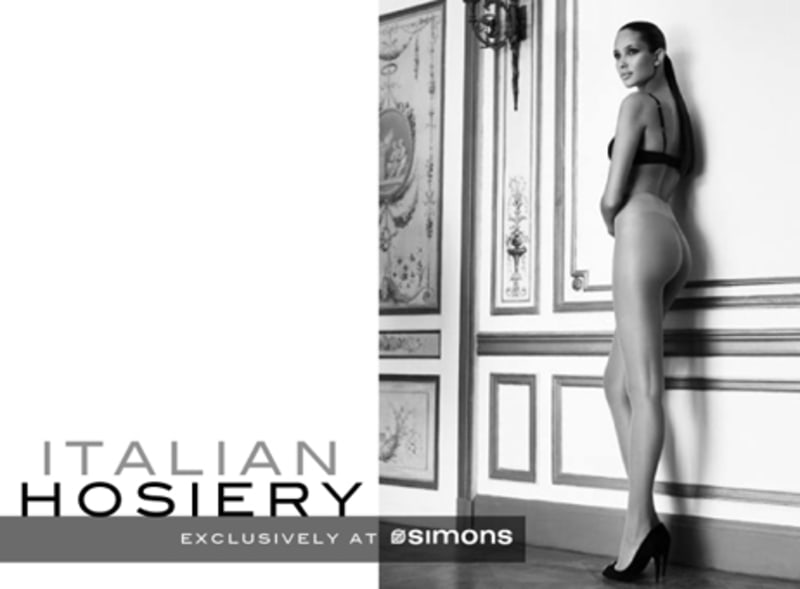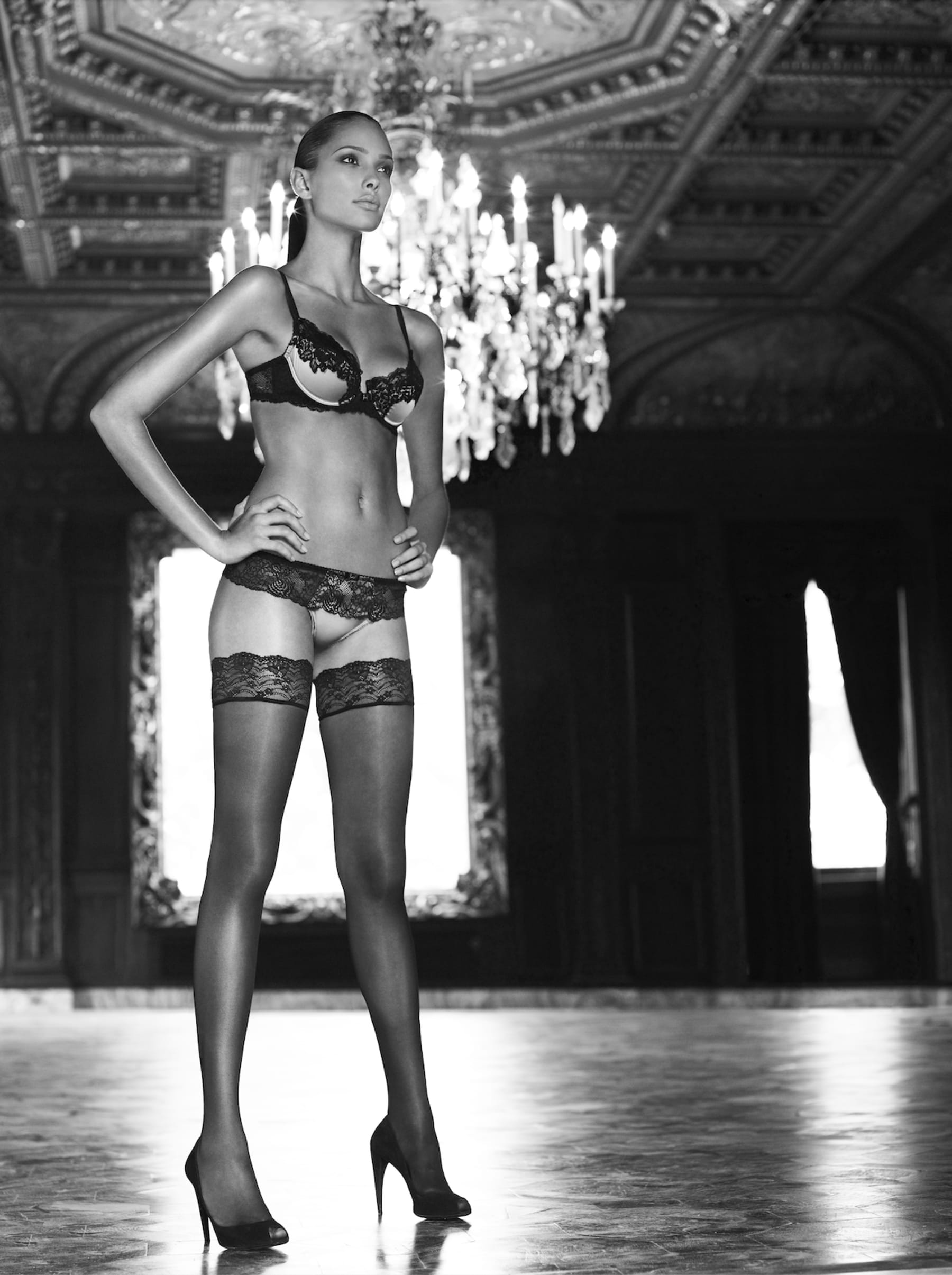
"Some campaigns are produced. Some are arrived at. This one was arrived at — in a New York mansion, on solid marble stairs, with a Brazilian model who understood exactly what the camera needed, a photographer who knew how to find the light without chasing it, and a stylist who had spent years learning restraint. The images were of a quality that belonged in Paris Photo. They remain."
— Daniel Stanford · Editor-in-Chief · MODUS · On the Simons Lingerie Editorial
The brief that became
a career-defining moment.
When La Maison Simons brought Daniel Stanford in-house as Photo Art Director, they were making a deliberate statement about where the brand intended to go. Stanford was, at that moment, the most sought-after creative director in Canadian fashion — he had been flown to Columbus, Ohio twice in two years by Victoria's Secret, who were actively considering him for Creative Director of VS Stores. Over ten separate interviews, he had been evaluated for positions including Photo Art Director of their catalog division. That Victoria's Secret was circling him this closely was not incidental. It was a signal.
Simons moved first — and moved well. The offer came with a condition Stanford valued as much as the compensation: the ability to work primarily from his Montreal studio, flying to the Quebec City head office for weekly creative reviews with the senior buyers across every department, from the youth sub-brand Twik to DJAB menswear to the men's underwear division. He was embedded in every category, embedded in every conversation. In those days, that level of creative access and working autonomy was rare. He accepted.
"I was the only Creative Director in Canada being interviewed by Victoria's Secret. They flew me to Columbus twice. Simons moved first, and they moved with intelligence — they gave me the offer, the access, and the autonomy. I said yes. The Lingerie and Hosiery series was one of the first things we produced together."
— Daniel Stanford · On joining La Maison Simons
New York. Malina Corpadean.
Randy Smith. Sabrina Jales.
The shoot was built around a collaboration of genuine talent. Malina Corpadean, the Montreal-based photographer, brought an eye trained to find the formal geometry in intimate spaces — the way light organizes a room, the way a body understands its own architecture. Randy Smith, the stylist, had built his career at the intersection of editorial precision and commercial wearability; his work understood that lingerie photography lives or dies on the relationship between fabric and skin, between what is shown and what is implied. Stanford had worked with both before. He trusted both completely.
Sabrina Jales was the third element — and perhaps the decisive one. Brazilian-born, with a physical presence that carried both warmth and precision, she understood intuitively what the editorial required. Face-driven in its framing, formally composed against the marble architecture of the mansion, the series was built on the intelligence Jales brought to each image. She was not performing for the camera. She was in full possession of it.
The series was conceived as editorial packaging for the Simons lingerie and hosiery category — face-driven imagery that could anchor the brand's positioning at the intersection of accessible luxury and genuine aesthetic authority. It succeeded on every level. Peter Simons recognized immediately what the team had produced. The images carried the quality of work that belongs in Paris Photo — a level Stanford had every intention of proposing. They remain among the finest editorial images produced under his art direction.
"Face-driven. That was the editorial direction from the start. The body is the subject, but the face is where the intelligence lives. Sabrina understood this without being told. Malina found it in the light. Randy built the frame around it. The result was a series that did not need a trend to validate it."
— Daniel Stanford · Art Director · On the editorial approach
After Simons.
Sabrina, Sports Illustrated, Mazzucco.
The relationship with Sabrina Jales did not end with the Simons campaign. When Stanford subsequently launched his model representation practice, she was among the talent he brought forward. He introduced her to Raphael Mazzucco — the photographer who had been Stanford's collaborator on the LIAA award-winning Guess campaign — and facilitated a Sports Illustrated shoot that placed her in one of the most prominent editorial contexts in American publishing. The arc from the Simons studio in New York to the pages of Sports Illustrated is a direct line — one that began with the precision and intelligence of this series.
The most recruited
creative director in Canada.
During the period when the Simons Lingerie editorial was produced, Daniel Stanford occupied a singular position in Canadian fashion. Victoria's Secret — then at the apex of their global cultural dominance — had been interviewing him across more than ten separate conversations over two consecutive years. The positions under consideration ranged from Creative Director of VS Stores to Photo Art Director of their catalog division. He was flown to their Columbus, Ohio headquarters twice.
The significance of this is not self-promotional. It is contextual. The taste and editorial intelligence that produced the Simons campaign was the same intelligence Victoria's Secret was evaluating. That Simons recognized it and moved decisively — offering the in-house position before VS could conclude their process — speaks to what was at stake and what the work was worth.
Sabrina Jales arrived at the Simons shoot as a working model with a strong commercial book and a face that the camera found immediately. What the shoot revealed — and what the subsequent editorial record confirmed — was a level of editorial intelligence that exceeded the standard commercial brief. She was not a subject being photographed. She was a collaborator who understood the visual language being built and contributed to it actively.
The face-driven framing Stanford established for the series demanded presence over pose, specificity over formula. Jales delivered both. The images that resulted occupy a different register than conventional lingerie photography — quieter, more certain, more enduring.